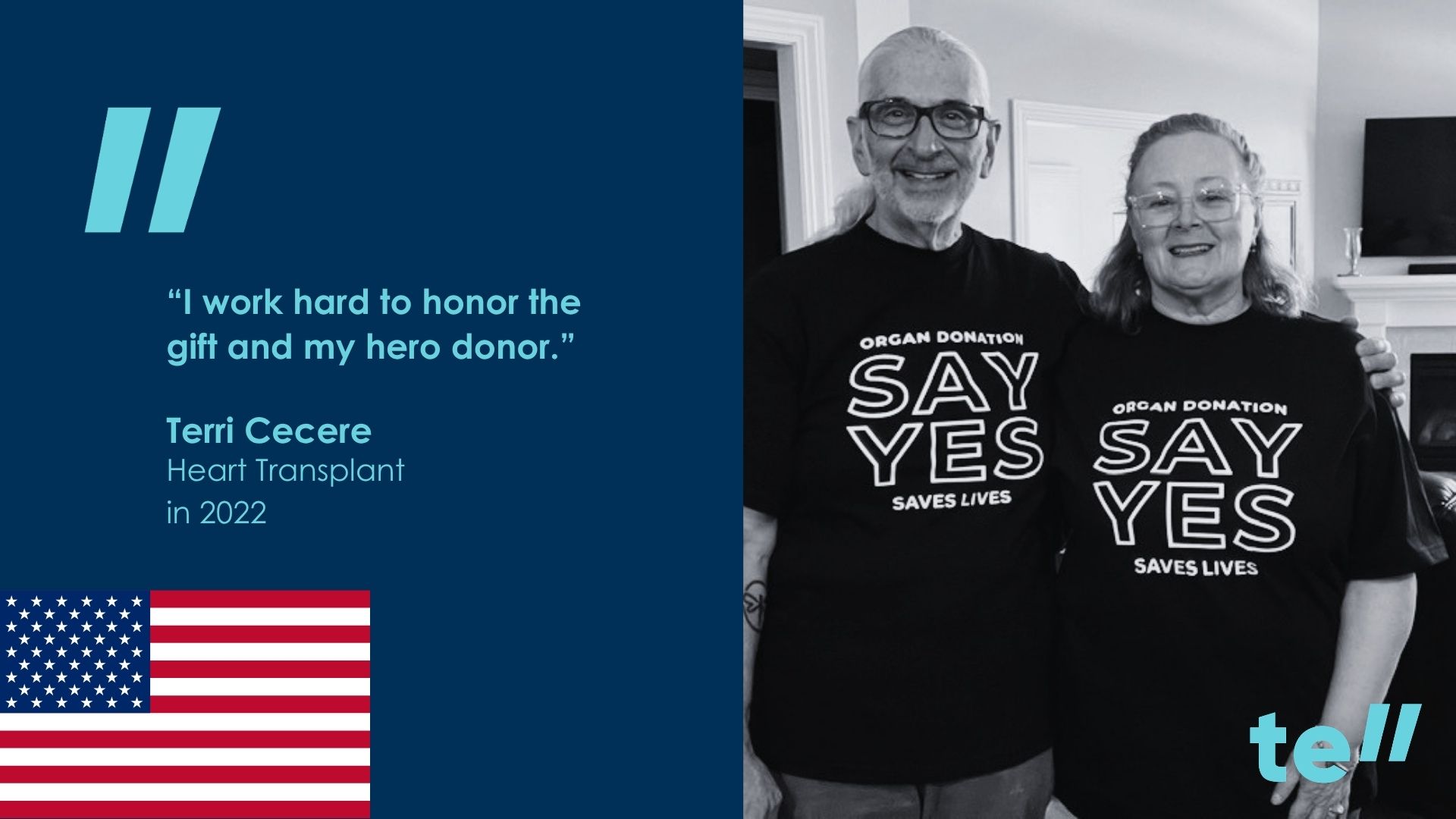
When George Cecere’s wife received a life-saving heart transplant, it transformed their family’s future. Three years later, he chose to give the same gift of hope to someone else by becoming a living kidney donor. This is his story of gratitude, purpose, and the power of paying a second chance forward.
1. Which organ did you donate, and in what year?
I donated a kidney to my cousin in 2025.
2. How long was your recipient on the waiting list for an organ?
2.5 Years.
3. What made you decide to donate?
My wife Terri received the gift of a new heart in November of 2022. After her transplant, we both became involved in advocacy for organ, eye, and tissue donation. We began by becoming ambassadors for 2 different OPOs and several other organ donation organizations. That experience not only changed our family’s life, but it also gave me a deeper understanding of the transplant journey as a whole — not just for recipients, but for caregivers and families walking beside them every day. As I became more involved in advocacy and founded TCH Caregiver’s Heart (a worldwide support community for caregivers of organ transplant recipients – https://tchcaregiversheart.com) I had the opportunity to meet so many transplant families and individuals still waiting for their second chance. I listened to stories of people spending years on dialysis, families living in uncertainty, and patients hoping that someday the call would come. The more I learned, the more I felt pulled toward living donation. At first, it was simply a thought in the back of my mind — a way to help bring the gift of life full circle after everything transplantation had given to our family. But over time, that thought became something I couldn’t ignore. I decided to begin the testing process to become a living kidney donor. Like many people considering donation, I had questions and concerns. I wondered what surgery would be like, how difficult recovery would be, and whether I would truly be able to return to normal life afterward. What I discovered was a process filled with education, support, compassion, and an incredible transplant team that genuinely cared about my well-being every step of the way.
4. Describe the emotions experienced when you were told that you are a suitable donor?
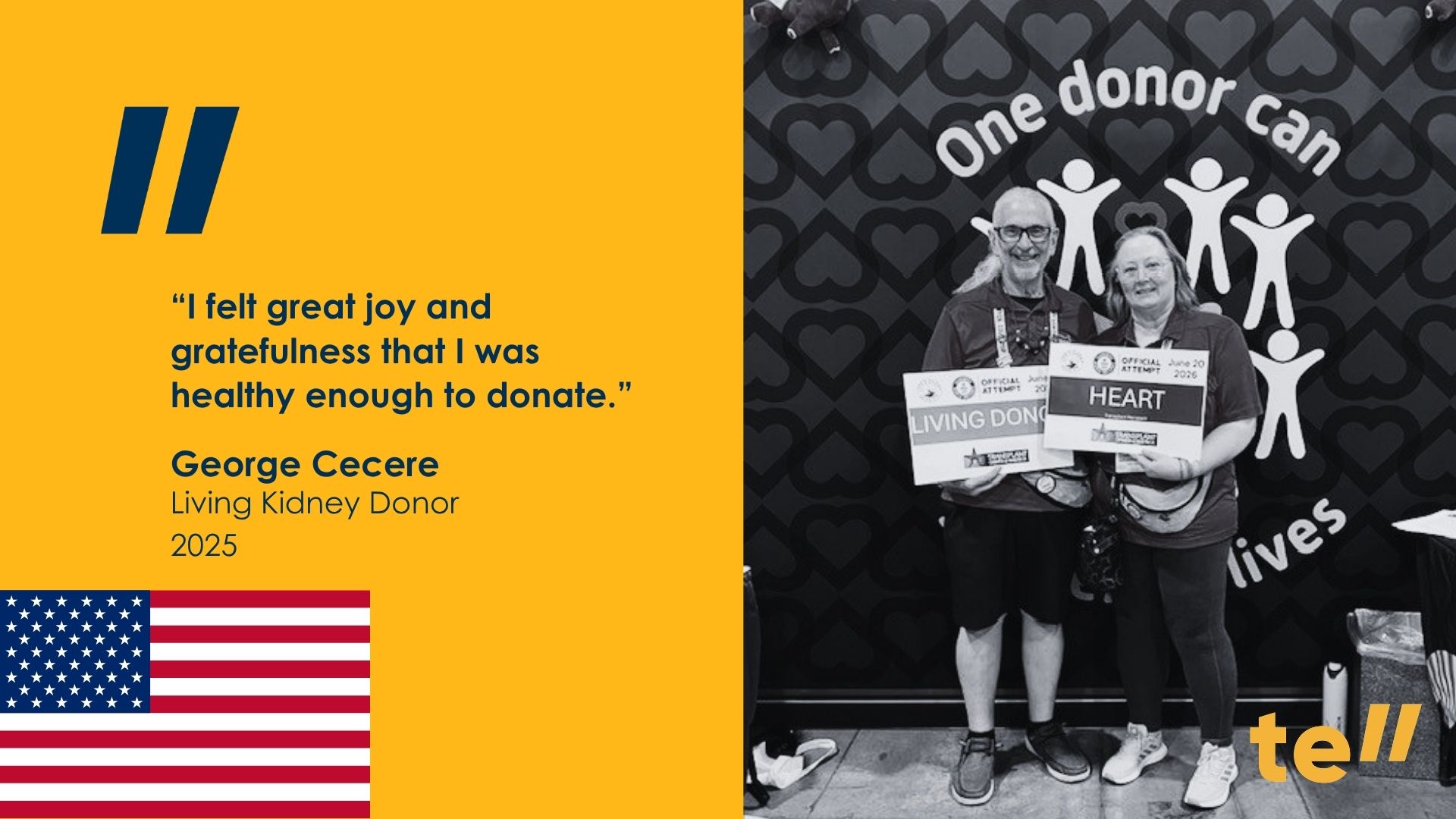
I was informed that I had been approved to be a living donor on the third anniversary of my wife’s life-saving heart transplant. It felt like a full-circle moment and held significant meaning, particularly on the anniversary of her gift of life. I felt great joy and gratefulness that I was healthy enough to donate.
5. What is life like now, after donating an organ?
Without question, it is one of the most meaningful decisions I have ever made.
What surprised me most was not just the impact on the recipient, but the impact it had on me personally. There is something incredibly powerful about knowing you were able to help someone reclaim their future — more time with family, more memories, more life.
6. What advice would you give people considering being a living donor?
For anyone considering living donation, I would simply say this: take the first step and learn more. Ask questions. Talk to donors. Talk to transplant teams. The process is far less frightening than many people imagine, and the opportunity to change — and literally save — a life is extraordinary. Living donation is not for everyone, and that’s okay. But for those who feel even the slightest pull toward it, I can honestly say it was one of the greatest privileges of my life.
7. Why do you think there is a shortage of donors?
Lack of awareness and education, along with misinformation and misconceptions about the process.
8. Has the idea of an altruistic donor become an outdated expectation in a modern society?
I don’t believe that it has; it is just not as well understood as it needs and deserves to be. More public awareness by sharing our stories of transplantation and donation will help. Also, beginning education at a younger age, with teenagers just getting their driver’s license, who are faced with the question of becoming a donor for the first time. Educating the next generation of organ donors is vital.
9. What is the biggest stigma/myth you have heard about organ donation?
That a potential donor will not receive proper medical care so that organs can be taken.
10. If you could describe donation in one word, what would it be?
Transformative
11. Are there any reason NOT to be an organ donor?
There are no reasons not to become an organ donor as long as you educate yourself so you can make an informed decision. Donation changes the lives of the recipient, their family, future generations and society as a whole.
12. If you could be any organ, what organ would you be and why?
A heart- two hearts are better than one!