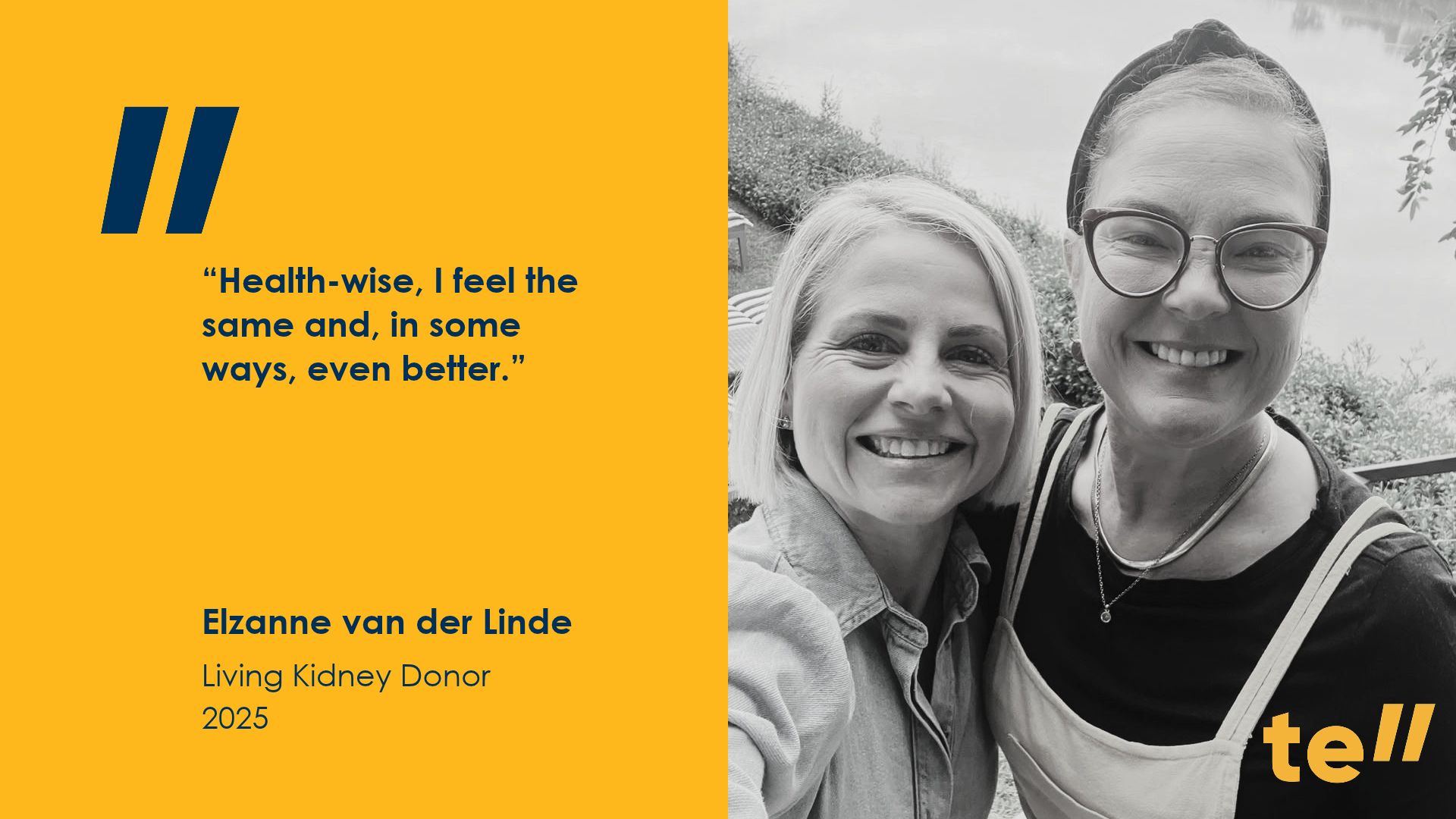
Amoret Ferreira, 47, from Upington, spent nine years on the waiting list, attached to a peritoneal dialysis machine for 10 hours every day. On 23 September 2025, she received a kidney from living donor Elzanne van der Linde. Today, she is free of dialysis, growing stronger and able to be present for her family. Her one word for transplant: grace.
1. Which organ did you receive, and in what year?
I received a kidney transplant in September 2025.
2. How long were you on the waiting list for your organ?
I was on the waiting list for 9 years.
3. What was life like before the transplant? How did you spend your days?
Life before the transplant was pure survival, when I look back at it now. I was on peritoneal dialysis, which meant that I was attached to the dialysis machine for 10 hours every day. I was tired all the time but did not realise how tired I was until after the transplant, when I started to gain my strength back. Travelling anywhere was always a big issue, as the peritoneal dialysis bags were heavy to carry and took up a lot of space. Medications and side effects of medications were many and relentless. I was not able to be the wife & mother that I wanted to be and missed out on so much as a result of not being able to keep up. This was no way to live.
4. Describe the emotions experienced when you were told your donor is a match?
I could not believe it, I was stunned, overjoyed and thankful. It felt like a gift from God and that my prayers have been answered.
5. What is life like now, after the transplant?
After the transplant, a feeling of holy thankfulness overwhelmed me, no dialysis anymore, that was the biggest and best change. I was able to exercise and get stronger. I’m now able to be present and there for my family and to share in all the joys.
6. What advice would you give patients on the waiting list?
My advice to anyone on the waiting list is to look for a living donor. Be pro-active and get a second opinion. The waiting list in South Africa is long, and dialysis is a tedious and debilitating process that breaks down your body over time.
7. Why do you think there is a shortage of donors?
I think that people are not educated enough to realise that they can be living donors. Others are scared of what will happen you their own health and bodies after donation. Even if you do not want to be a living donor you can still donate your organs after you have passed away.
8. If you could describe transplant in one word, what would it be?
Grace.