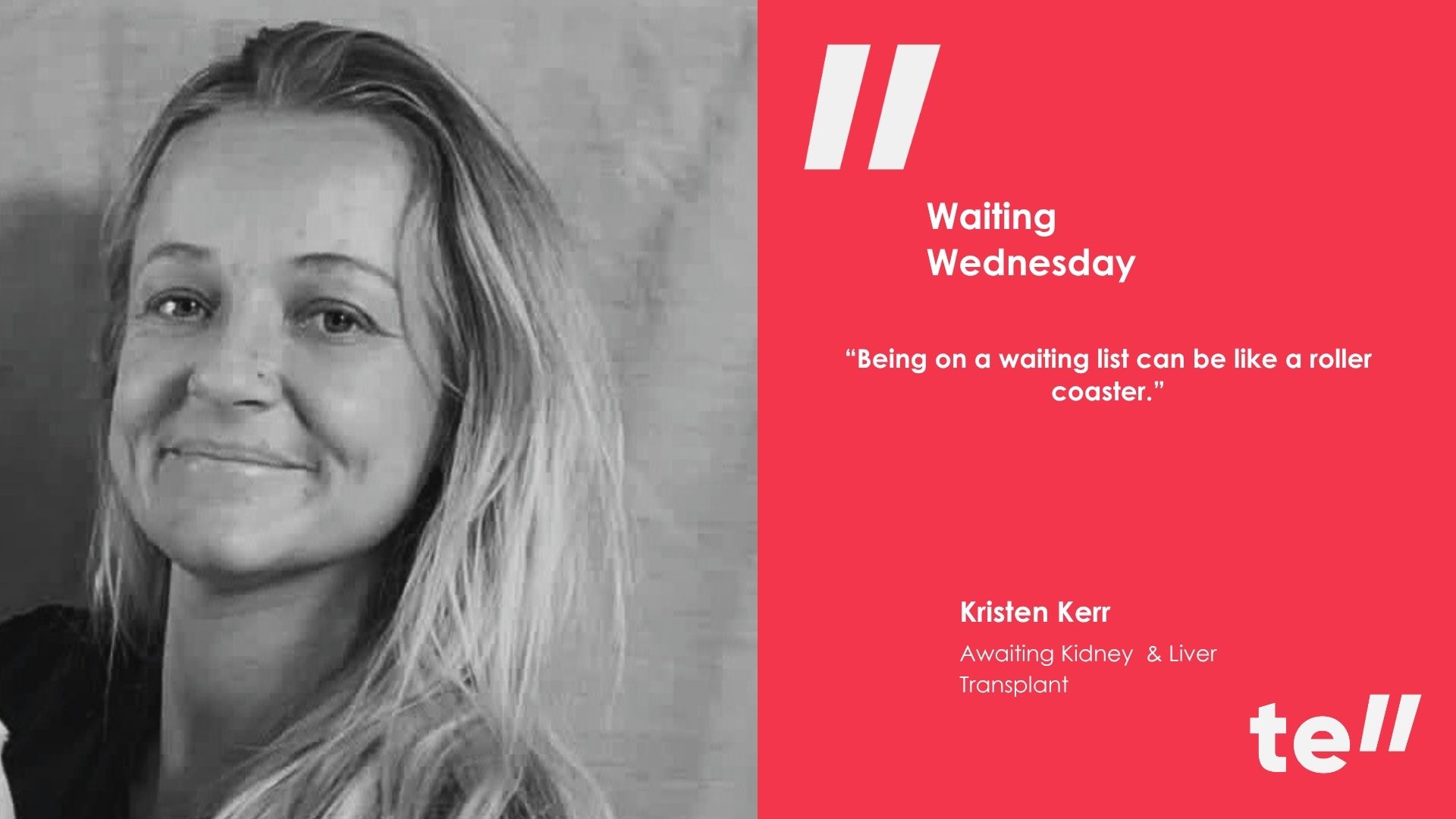
Kristen Kerr knows what it feels like to be given a second chance. After receiving a kidney from her father in 2013, she enjoyed more than a decade of renewed health. Today, she’s back on dialysis, waiting for a combined liver and kidney transplant, and holding on to hope for the future.
1. When were you first diagnosed with kidney failure?
My first diagnosis was in 2012, if my memory serves me right!
2. What was life like before your first transplant?
Life before a transplant can be very challenging and definitely has its ups and downs. You try to carry on with everyday life, but there are many restrictions when it comes to your diet and fluid intake.
Now that I’m older and waiting for another transplant, I spend my Monday, Wednesday, and Friday mornings on dialysis for four hours. Afterwards, I might stop at the shops before heading home to the farm. I try to stay active by keeping busy outside, but I’ve also learned to listen to my body. When I’m tired, I rest.
3. Which organ did you receive, and when?
I received a kidney from a living donor, my father, in 2013.
4. What was life like after your first transplant?
Life after my first transplant was amazing. I felt strong, healthy, and free from dialysis. For the first time in a long time, I felt “normal.” It gave me a renewed sense of life.
5. What happened with your first transplant?
Last year, my transplanted kidney slowly started losing function, and I had to begin dialysis again in January 2026. My doctor mentioned that tacrolimus toxicity may have contributed, although I can’t remember all the details.
6. How did you discover that something was wrong?
I developed severe pain in my feet and eventually couldn’t walk. My partner rushed me to the emergency department, where we discovered that my body had become overloaded with toxins.
7. What emotions did you experience when your first transplant failed?
I was incredibly sad. When someone gives you a second chance at life and that gift stops working, it can feel like you’ve somehow failed, even though you know it isn’t your fault.
At the same time, you learn to adjust very quickly to your circumstances. Life goes on, and you find a way to keep moving forward.
8. Are you currently on the waiting list?
Yes. I am now waiting for a combined liver and kidney transplant.
I have received one call for potential organs, but I was the backup recipient, so the transplant didn’t happen that day. Being on the waiting list is an emotional roller coaster. Some days I’m full of hope, while other days are much harder. But every morning I wake up feeling incredibly grateful to still be here.
9. What are you most looking forward to after your transplant?
I’m looking forward to feeling healthy and strong again. I love food, so being able to enjoy a more normal diet will be wonderful. I’m also looking forward to no longer needing dialysis.
Most importantly, I’d love to start a family one day, and I need to be healthy for that.
10. What advice would you give other patients experiencing rejection or transplant complications?
I want people to know that, although it feels scary, life after a transplant really can be a whole new beginning.
Don’t stop living while you’re waiting. Stay positive, follow your diet as best you can, and do everything you can to stay healthy and mentally strong until your transplant comes.
At the same time, it’s okay not to be okay. This journey is emotionally exhausting, and it’s completely normal to have difficult days. Give yourself permission to feel those emotions.
11. What is the biggest myth or misunderstanding you’ve heard about organ and tissue donation?
I think there’s such a shortage of donors because organ donation isn’t something people talk about enough or fully understand. There are also many conspiracy theories surrounding organ donation, which create fear and prevent families from having these important conversations.