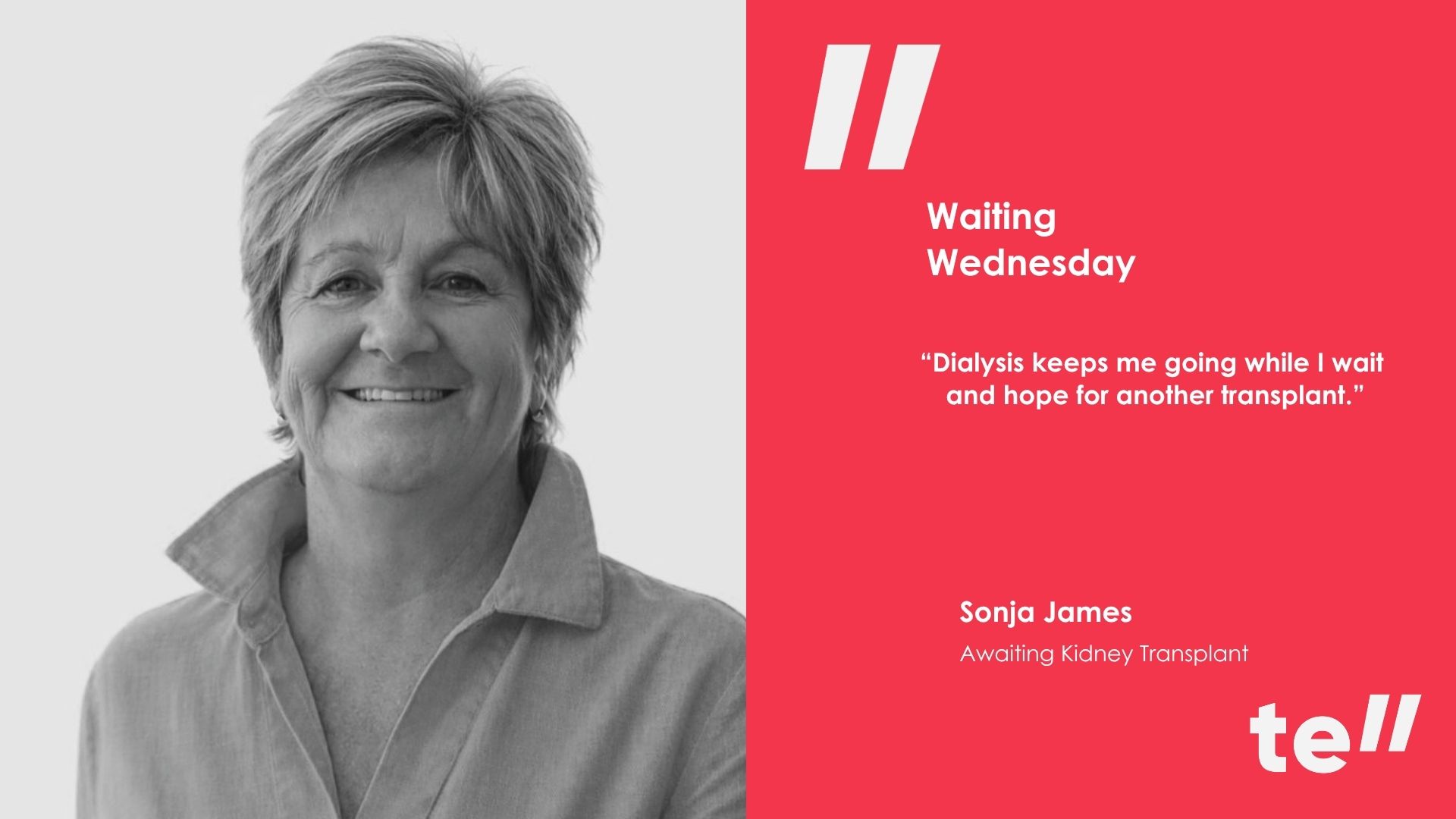
Sonja James is 61 years young and lives in Pretoria. She is currently waiting for a kidney transplant. This will be her second transplant, as her first transplanted kidney functioned successfully for 8½ years. She shares her story with us.
1. When were you diagnosed with organ failure and which organ are you waiting for?
I was diagnosed with SLE (Systemic Lupus Erythematosus), an autoimmune disease that affected my kidneys. After living with the condition for 12 years, I received a kidney transplant from my brother in October 2013.
2. How has your health journey affected your daily life, work, family, or lifestyle?
Fatigue has been a constant challenge, but I have always tried to live life as fully and normally as possible.
3. Have you experienced rejection?
Yes. In June 2022, my transplanted kidney suddenly stopped functioning. Despite extensive testing, no clear cause was found.
4. How did you discover that you were in rejection, or that something was wrong?
I lost 25 kg and felt extremely unwell. The most significant symptom was severe shortness of breath.
5. What emotions did you experience during this period?
I was devastated. There was sadness, confusion, and many unanswered questions. I also wondered whether I had somehow contributed to the kidney failure, even though 60% of transplanted kidneys fail within 10 years.
6. Are you currently receiving treatment?
Yes. I have been on haemodialysis for the past four years, attending treatment three times a week for four hours at a time.
7. How long have you been on the transplant waiting list?
Four years.
8. What are you most looking forward to after transplant or recovery?
Freedom from dialysis. Recovery may be challenging, but it offers a far better quality of life than spending 12 hours a week connected to a machine.
9. What has been the most difficult part of this journey?
The waiting and the lack of control. I have had two potential living donors who were unfortunately not matches. Each new donor requires a lengthy testing process, and waiting for results can take months.
10. Why do you think there is a shortage of donors in South Africa?
A lack of awareness, education, and ongoing myths surrounding organ donation.
11. What is the biggest stigma or myth you have heard about organ donation?
That doctors will not do everything possible to save your life if you are a registered organ donor.
12. What advice or message would you give to:
Other patients going through rejection or waiting for a transplant?
Stay strong and keep believing. One day at a time.
Families considering organ donation?
Organ donation is the ultimate gift of life and can bring hope to many people.
13. Is there anything else you would like people to understand about transplantation?
Solid organ donation can only take place after a person has been declared brain dead, and family consent is required. That is why it is so important to discuss your wishes with your loved ones.
Living donation is also possible through the donation of one kidney or part of a liver, giving someone else a second chance at life.