Transplant Tuesdays: Mario’s Heart Transplant Story
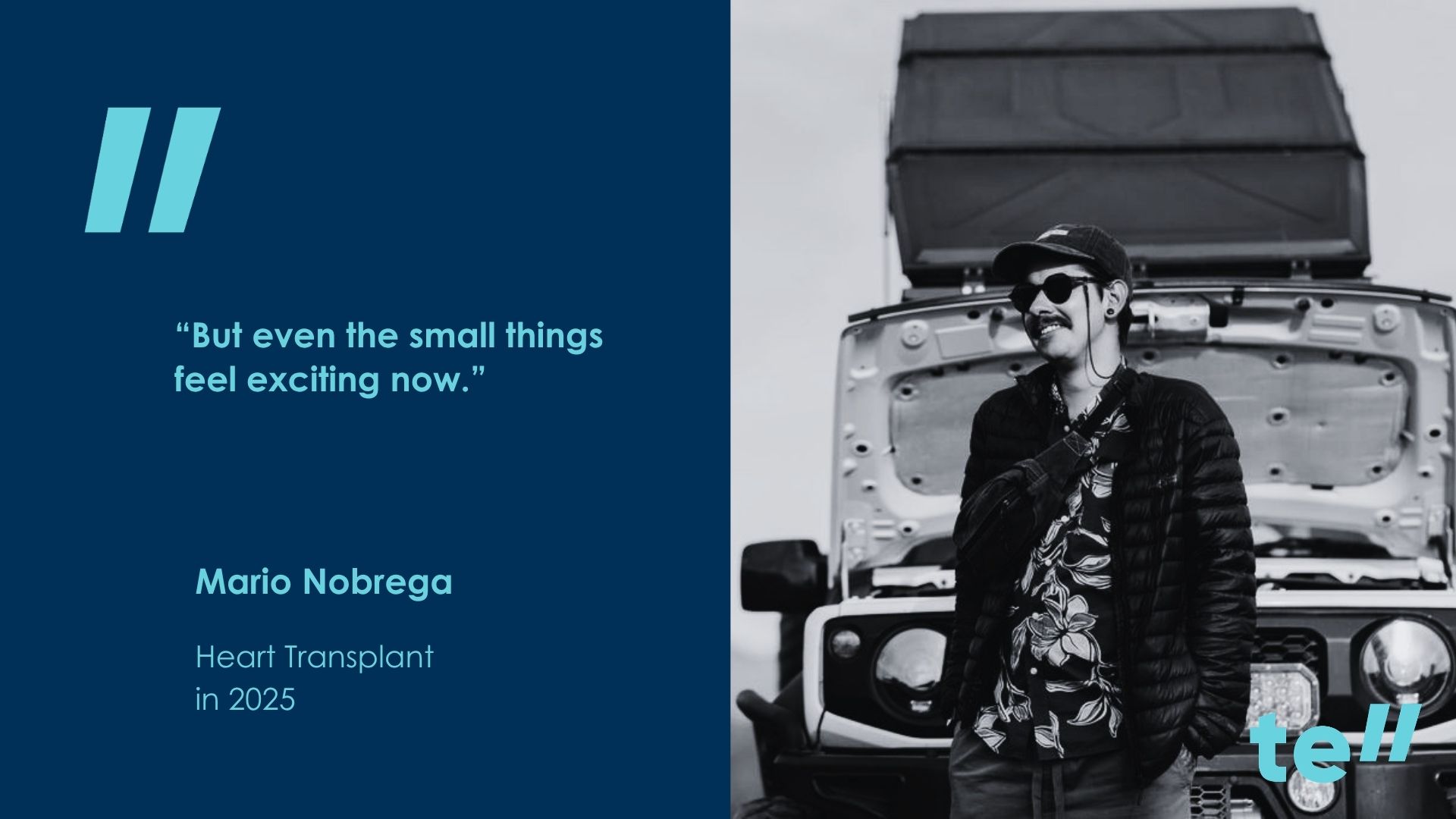
At 31, Mario Nobrega, from Cape Town spent over a year on the transplant waiting list, navigating uncertainty, changing health, and the reality of life slowing down.
In this #TransplantTuesday story, he shares what waiting really feels like, the moment everything changed, and how life looks now on the other side of a heart transplant.
1. Which organ did you receive, and in what year?
I received a heart transplant in 2025.
2. How long were you on the waiting list for your organ?
I was on the waiting list for just over a year and a half.
3. What was life like before the transplant? How did you spend your days?
Life before transplant was good until I started getting quite sick. Toward the end, my days became very limited. I would wake up, do a bit of work where I could, rest in the afternoon, then try finish the day. Even taking my dog for a short walk of less than a kilometre was about all I could manage.
I was still able to do some things, so I cannot complain too much, and I was even able to keep working, which still surprises me looking back. But by that stage, life had definitely become much smaller and more focused on just getting through each day.
4. Describe the emotions experienced when you received “The Call” for a transplant?
Getting the call was overwhelming in the best and scariest way at the same time. I had been waiting for a while, and by that point I felt like I was not really living anymore, I was just surviving. So there was a lot of excitement because I knew this was my chance to start living properly again.
At the same time, there were obviously nerves, fear, and panic because it is such a huge moment and there is always that fear that something could go wrong. It is hard to describe it as one single emotion because it was a mix of everything at once, but excitement was probably the strongest part of it.
5. What is life like now, after the transplant?
Life after transplant is still a bit of an adjustment because I am still within the first year, but honestly, life felt better almost immediately. Even in the early days after surgery, when I still could not do much, I already knew things had changed for the better.
Everything has gone quite smoothly for me, and I feel very privileged because of that. The transplant has given me the energy to start putting my life back into a place where I want it to be. It has allowed me to focus on things I wanted to do before, but simply did not have the strength for.
I am still doing biopsies, tests, and the usual follow-ups that come with the first year after transplant, and I cannot travel internationally yet, so this year has been more about planning ahead and slowly getting back into life. But even the small things feel exciting now. Something as simple as taking my dog for a longer walk than I used to is a big win. It has definitely changed my perspective and made me appreciate the small things much more.
6. What advice would you give patients on the waiting list?
My advice would be to focus on what you can do, rather than what you cannot. If all you can manage is a short walk around the block, then do that. Try to stay as healthy and as fit as possible within your limits, because that will help make the process a little easier.
It is also really important to find something that keeps your mind busy and gives you a sense of purpose, even if it is something small like photography, drawing, or any hobby you enjoy. For me, keeping busy helped a lot. Otherwise, it is very easy to become consumed by the fact that you are waiting.
I would also say do not put pressure on yourself to keep up with healthy people. That was one of the hardest things for me. I still wanted to do everything my friends were doing, even when I simply could not. Once I accepted my limits and stopped trying to force things, it became much easier to cope. Even if your only goal for the day is just to get out of bed and do one thing, that still counts.
7. Why do you think there is a shortage of donors in South Africa?
I think there is still a big lack of understanding around organ donation and how the process actually works. If people do not know much about it, then when the time comes for a family to make that decision, it becomes even harder. Education is a major part of it. If more people understood organ donation properly before they were ever in that situation, I think families would feel more informed and more confident in making that decision.
I also think the system itself plays a role. Personally, I believe South Africa should move more towards an opt-out system, where people are considered donors unless they choose otherwise, like in countries such as Spain. If that is combined with proper education from school level, people grow up already understanding the process. I think that would make a huge difference.
8. If you could describe transplant in one word, what would it be?
Life-changing.
Organ donation saves lives, but in South Africa, your family makes the final decision.
Tell your family. Tell your loved ones. #MakeItKnown